As global communication continues to accelerate, businesses increasingly rely on advanced translation technologies. One of the most powerful innovations in this field is Neural Machine Translation (NMT). Understanding what is neural machine translation helps organizations choose the right balance between speed, cost, and accuracy in multilingual communication.
This guide explains neural machine translation, how it works, its benefits, limitations, and when businesses should use it.
What Is Neural Machine Translation?
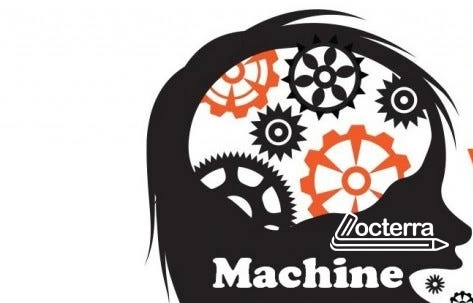
Neural Machine Translation (NMT) is an AI-driven translation method that uses deep learning and neural networks to translate text from one language to another.
Unlike traditional rule-based or statistical translation systems, NMT analyzes entire sentences as a whole rather than translating word by word. This allows the system to better understand context, meaning, and linguistic structure.
In simple terms, when asking what is neural machine translation, the answer is:
It is a machine translation approach that mimics how humans understand language by learning from vast amounts of bilingual data.
Learn about our AI SERVICES
How Neural Machine Translation Works
Neural machine translation relies on artificial neural networks, particularly encoder-decoder models.
The process includes:
-
The source text is converted into numerical representations
-
The neural network analyzes sentence context and structure
-
The system predicts the most natural translation in the target language
-
The output is continuously improved through training on large datasets
Modern NMT systems also use attention mechanisms, allowing them to focus on the most relevant parts of a sentence during translation.
learn about : birth certificate translation
Neural Machine Translation vs Traditional Machine Translation
Understanding what is neural machine translation becomes clearer when compared to older systems.
Traditional machine translation:
-
Translates word by word
-
Struggles with context and idioms
-
Produces rigid or unnatural output
Neural machine translation:
-
Translates full sentences
-
Understands context and tone
-
Produces more fluent and human-like translations
This evolution has significantly improved translation quality across many language pairs.
Benefits of Neural Machine Translation
Neural machine translation offers several advantages for businesses and organizations.
Key benefits include:
-
Faster translation turnaround
-
Improved fluency and readability
-
Better handling of complex sentence structures
-
Continuous improvement through machine learning
-
Scalability for large volumes of content
For global companies, NMT enables rapid multilingual communication without delays.
Limitations of Neural Machine Translation
Despite its strengths, neural machine translation is not perfect.
Common limitations include:
-
Difficulty with highly specialized terminology
-
Errors in legal, medical, or technical content
-
Inconsistent handling of cultural nuances
-
Lack of legal accountability
This is why professional review is often required for critical content.
When Should Businesses Use Neural Machine Translation?
Neural machine translation is ideal for:
-
Internal communications
-
Large-scale content drafts
-
Customer support tickets
-
Informational content
-
Real-time or high-volume translation needs
However, for sensitive or high-stakes documents, human expertise remains essential.
Neural Machine Translation and Human Post-Editing
Many professional translation workflows combine NMT with human post-editing.
This approach:
-
Improves accuracy
-
Ensures terminology consistency
-
Corrects contextual or cultural errors
-
Meets professional quality standards
At Locterra, neural machine translation can be integrated with expert linguistic review to deliver both speed and reliability.
Industries Using Neural Machine Translation
Neural machine translation is widely used in:
-
Technology and software
-
E-commerce
-
Marketing and digital content
-
Travel and hospitality
-
Customer support services
Its flexibility makes it a valuable tool across multiple sectors.
Why Neural Machine Translation Matters for the Future
As AI continues to evolve, neural machine translation will play an increasingly important role in global communication. Businesses that understand what is neural machine translation can leverage it strategically—using automation where appropriate while maintaining quality through professional oversight.
FAQs
What is neural machine translation (NMT)?
Neural machine translation is an AI-based translation technology that uses deep learning and neural networks to translate text by analyzing entire sentences and context, rather than translating word by word.
How does neural machine translation work?
NMT systems use encoder-decoder neural networks to convert source text into numerical data, analyze context and meaning, and generate natural-sounding translations in the target language. The system improves through continuous learning.
How is neural machine translation different from traditional machine translation?
Traditional machine translation relies on rules or statistical models and often translates word by word. Neural machine translation processes full sentences, understands context, and produces more fluent, human-like translations.
What are the main benefits of neural machine translation for businesses?
Key benefits include faster turnaround times, improved translation fluency, scalability for large content volumes, better handling of complex sentences, and continuous quality improvement through machine learning.
What are the limitations of neural machine translation?
NMT may struggle with specialized terminology, legal or medical accuracy, cultural nuances, and accountability. Errors can occur without human review, especially in high-risk content.
When should businesses use neural machine translation?
Neural machine translation is suitable for internal communications, high-volume content, drafts, customer support, and informational materials where speed is essential and risk is low.
Is neural machine translation suitable for legal or medical documents?
On its own, NMT is not recommended for legal or medical documents due to accuracy and liability concerns. These documents require professional human translation or post-editing by subject-matter experts.
Final Thoughts
So, what is neural machine translation?
It is an advanced AI-powered translation technology that delivers fast, fluent, and scalable multilingual communication.
When combined with professional language services, neural machine translation becomes a powerful asset for businesses operating across borders. Locterra helps organizations harness this technology effectively while maintaining accuracy, clarity, and trust.